


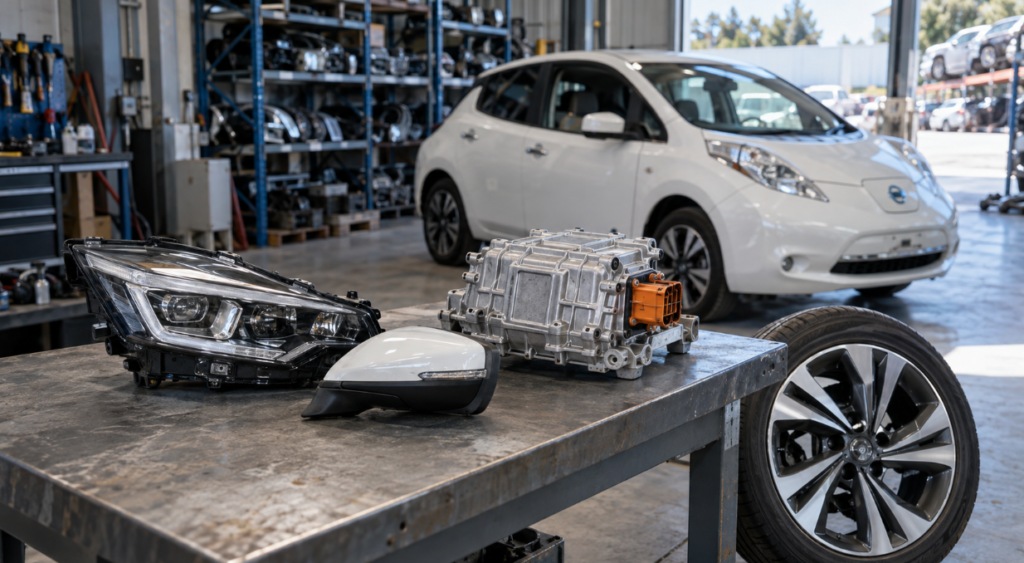
When a petrol car reaches the end of its working life, most owners know they can contact a wrecker. But what happens when the unwanted vehicle is electric?
An EV can become uneconomical to repair after an accident, develop an expensive electrical fault or reach a point where keeping it on the road no longer makes financial sense. It still contains useful parts and recoverable materials, but handling it requires a different approach.
For vehicle owners in Hastings, Napier and across Hawke’s Bay, understanding these differences can help when deciding what to do with an unwanted electric car.
What Changes When an Electric Car Reaches a Wrecking Yard?
Traditional vehicle wrecking involves assessing a car, removing reusable components, draining fluids and recovering materials from what remains. Engines, transmissions, alternators and starter motors have long been important sources of second-hand parts.
Electric vehicles have a different setup. They use an electric motor and a high-voltage battery instead of a petrol or diesel engine. This affects which parts can be reused and how wreckers handle the car.
The main goal of wrecking an electric vehicle is still to recover usable parts and recycle the rest. The big difference is that it takes specialised knowledge to handle the electrical systems.
EVs Still Contain Plenty of Reusable Parts
Just because an electric car has a battery problem doesn’t mean all its other parts are useless. Even if it’s too costly to fix, it might still have good doors, mirrors, seats, wheels, and suspension parts. These can help someone else fix their car without buying new parts.
Depending on condition and compatibility, recoverable components may include: Body panels, doors and glass, Headlights, tail lights and mirrors. It may also include wheels and suspension parts, seats and interior trim, Electric motors, and selected electronic components.
Electrical parts require careful assessment. Compatibility can depend on the model, software and whether programming is needed after installation. For anyone buying used EV parts, confirming suitability matters just as much as finding a good price.
Why the Battery Needs Extra Attention
The high-voltage battery is one of the biggest differences between electric vehicle recycling and conventional car dismantling.
An EV battery stores considerable energy. A vehicle that will not start, or has been written off after an accident, should not be assumed to have a discharged or harmless battery.
Before dismantling, qualified technicians must assess the vehicle’s condition and follow appropriate procedures for its electrical systems. Accident damage, water exposure and signs of battery deterioration can affect how it should be handled and stored.
Conventional vehicles also present hazards, including fuel, fluids and batteries. EVs add high-voltage systems and different battery risks to that assessment.
For owners, the practical message is straightforward: leave battery removal and electrical dismantling to appropriately trained professionals.
What Happens to an EV Battery?
No single outcome applies to every battery. Its condition, design and the available processing options all influence what happens next.
A battery that retains useful capacity may be considered for reuse or another energy-storage application. However, this requires assessment; a battery unsuitable for driving is not automatically suitable for a second life.
Other batteries need specialist recycling. Depending on their chemistry and the recycling method, recoverable materials can include lithium, nickel, cobalt, copper and aluminium. Not every battery contains the same materials, and recovery varies between processes.
It is also useful to distinguish vehicle dismantling from battery recycling. A wrecker may recover vehicle parts while a separate specialist handles the battery. Owners should ask where the battery will go rather than assume everything is processed at the same yard.
What Does This Mean for Vehicle Recycling in New Zealand?
EVs add work for dismantlers, transport operators, and battery processors. Suitable training, equipment and arrangements for specialist handling become part of the process.
For vehicle recycling in New Zealand, this means accommodating different technologies within the same industry. Petrol cars, diesel vehicles, hybrids and fully electric cars each have their own components and handling requirements.
Therefore, check EV recycling availability with the individual provider. Accepting an electric vehicle, dismantling it and processing its battery are different capabilities.
For owners comparing vehicle wreckers in Hastings or Napier, the useful question is whether the business can handle their particular vehicle and explain the next steps.
Before You Book an EV Collection
When you call a wrecker about an unwanted electric car, start with the make, model and year. Let them know whether it still drives or needs to be collected from where it’s parked.
You don’t need to know exactly what’s wrong with it. Just explain what you’ve noticed, such as a battery warning on the dashboard, trouble starting or damage from an accident. If the car has been flooded, mention that too.
Tell them where the car is and whether getting to it could be difficult—for example, if it’s in a narrow driveway or an underground car park.
Before booking, check that they accept your EV model and ask how they’ll handle the battery. It’s also a good time to confirm any collection costs and whether you need to do anything before they arrive.
Will Electric Vehicles Replace Traditional Car Wrecking?
EVs change the mix of parts passing through a wrecking yard, but they do not remove the need for conventional dismantling.
Owners still need replacement engines, gearboxes and mechanical parts for petrol and diesel vehicles. At the same time, electric cars create new opportunities to recover motors, electronics, and compatible body components.
For car wreckers serving Hastings and Napier, the work involves responding to the vehicles people own and the parts they need. A useful second-hand door or headlight can keep a serviceable component out of the landfill, no matter what powers the car.
Discussing Your Options With BJ Wreckers
Electric vehicle wrecking brings additional responsibilities, particularly around battery assessment and high-voltage safety. However, recovering suitable parts remains important when you have a vehicle that can no longer stay on the road.
BJ Wreckers provides car wrecking, salvage and used-parts services. If you have an unwanted vehicle in Hastings, Napier or the surrounding area, contact BJ Wreckers with its make, model and condition to discuss your options.
For an electric or hybrid vehicle, confirm acceptance and handling arrangements before booking collection. That conversation helps establish what is possible for your particular car.