


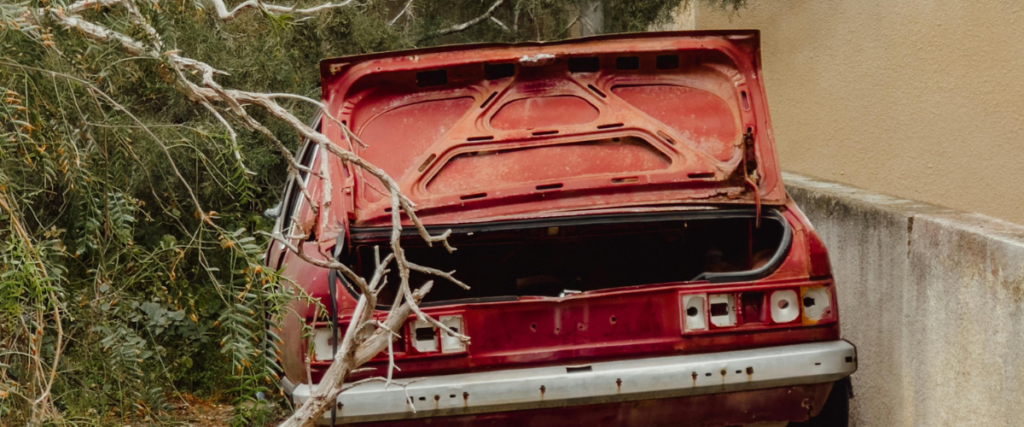
Across New Zealand, thousands of damaged, unwanted, and non-running vehicles are sitting idle in garages, backyards, farms, and driveways. To many owners, these cars seem like nothing more than scrap metal or an expensive problem waiting to be removed.
But what most people don’t realise is this: many damaged vehicles are actually hidden goldmines.
Even cars with severe accident damage, blown engines, failed transmissions, or rust issues can still hold significant financial value. From reusable parts to recyclable metals, damaged vehicles continue to generate demand across New Zealand’s automotive recycling industry.
If you’ve ever wondered “how much is my damaged car worth?”, the answer may surprise you.
In this guide, we’ll explore why damaged vehicles still carry value, what affects payouts in 2026, and how car owners across NZ are turning unwanted vehicles into instant cash.
Why Damaged Cars Still Have Value in NZ
Many vehicle owners assume a car becomes worthless after a major accident or mechanical failure. However, that’s rarely true.
A buyer of a damaged car won’t necessarily judge a vehicle by whether it still runs. Even when a car is no longer roadworthy, its parts and recyclable materials can still have value. Instead, they assess reusable spare parts, scrap-metal content, vehicle weight, demand for specific components, and export & recycling opportunities.
Even when a car is no longer roadworthy, many individual parts may still be perfectly usable. A vehicle may no longer be worth repairing as a whole, while individual components can still be useful. Engines, gearboxes, alternators, doors, panels, wheels, interior components and other parts may be recoverable depending on the vehicle and the extent of the damage.
This is why older vehicles, accident-damaged cars, and non-runners still attract competitive offers nationwide.
The Growing Demand for Automotive Recycling
Car recycling continues to play an important role in New Zealand, particularly as more attention is placed on reducing waste and making better use of materials recovered from end-of-life vehicles. As New Zealand shifts toward sustainability and electric vehicles, recycling old petrol- and diesel-powered vehicles helps reduce environmental waste.
Instead of ending up in a landfill, valuable components from damaged automobiles can be repurposed when they are dismantled properly.
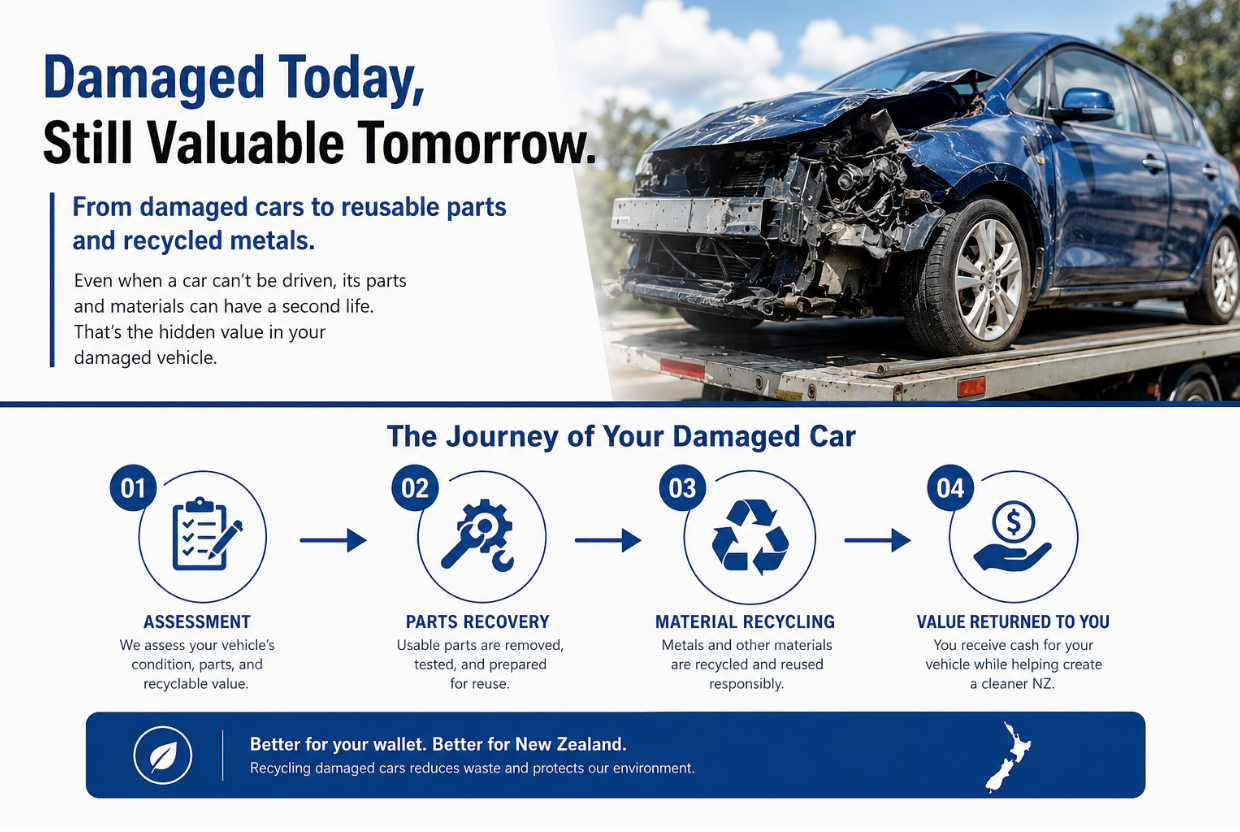
So what actually happens to a damaged car once it reaches a wrecker? While the process varies by vehicle, it generally involves three main stages.
- Recovering Reusable Parts
It’s an important step where functional components are removed, tested, and resold.
- Removing Hazardous Materials
Oil, coolant, fuel, and batteries are safely handled to prevent environmental contamination.
- Recycling Metal
Steel, aluminium, and copper are processed and reused in manufacturing industries. Because of this strong recycling network, the scrap-car market in NZ remains active and competitive.
What Determines the Value of a Damaged Car?
Not all damaged cars are worth the same amount, as different factors influence the overall pricing.
Vehicle Make and Model
Popular brands often have higher demand for spare parts. Popular makes such as Toyota, Mazda, Nissan, Honda, Ford and Hyundai may have stronger demand for certain replacement parts because there are more of these vehicles on New Zealand roads.
Luxury vehicles may also carry high-value components despite major damage.
Extent of Damage
Naturally, a car with little damage is worth more than one with serious damage. However, if important parts are still there, even severely damaged automobiles might still be valuable.
Cars affected by rear-end collisions, Flood damage, Mechanical failure, Hail damage, and cosmetic damage can still contain valuable salvageable parts.
Vehicle Weight and Metal Content
Larger vehicles contain more recyclable material. This means SUVs, 4WDs, vans, and trucks often yield higher scrap payouts than smaller hatchbacks.
Metal prices can also influence a vehicle’s recyclable value and may change over time.
Parts Demand
There are multiple parts that are in demand in the car market. Some of them are catalytic converters, alloy wheels, engines, transmissions, and more. If these parts are intact, your damaged vehicle could be worth substantially more than expected.
The Real Answer to “How Much Is My Damaged Car Worth?”
There is no fixed price for a damaged car because two vehicles of the same age and model can be worth very different amounts depending on their condition. A buyer will usually look at the make, model, year, type of damage, whether important components are still intact, the vehicle’s overall condition, and the value of recoverable parts and materials.
The easiest way to find out what your damaged car is worth is to request a quote for your specific vehicle, rather than relying on a general online estimate.
Why Holding Onto a Damaged Car May Not Make Sense
If you’re not using a damaged car anymore, keeping it around doesn’t do much good. It can take up space and get worse over time, especially if it’s outside. You might also have to keep paying for licensing, insurance, or maintenance.
If there are no realistic plans to repair or use the vehicle again, finding out its value can help you decide whether keeping it still makes sense.
What Happens to the Valuable Parts of a Damaged Car?
A damaged car does not necessarily lose all of its usefulness when it comes off the road. Depending on its condition, many components may still have a second life.
Usable mechanical parts can be removed and assessed for reuse, while components such as wheels, panels, mirrors, interior fittings and electrical parts may still be useful for other vehicles. Once reusable parts have been recovered, materials such as steel and aluminium can be separated for recycling.
This is one of the reasons a vehicle that looks beyond repair to its owner can still have value to a car wrecker. The car is assessed as more than a complete vehicle; its individual parts, materials, and remaining components all contribute to its value.
For owners, this also means that a damaged or non-running car does not necessarily need to be repaired before it can be sold. Its remaining value may already be sitting in the parts and materials it contains.
Environmental Benefits of Selling Damaged Cars
Selling a damaged vehicle for dismantling can also give usable parts and materials another life. Responsible vehicle recycling helps recover components and metals while ensuring fluids, batteries, and other materials are handled appropriately.
Responsible recycling helps reduce landfill waste, recover reusable materials, and also prevent hazardous leaks into soil and waterways.
As New Zealand continues focusing on environmental responsibility, recycling damaged cars plays an important role in the automotive industry.
Final Thoughts
A damaged car can look worthless when it is sitting unused in the driveway, particularly if it no longer runs or would cost too much to repair. But the condition of the complete vehicle is only part of what determines its value. Reusable components, recyclable metals, the make and model, and demand for particular parts can all make a difference.
If you’ve been wondering, “How much is my damaged car worth?”, the simplest way to find out is to have the vehicle assessed in its current condition. You may discover that the car you considered junk still has useful value left in it.
That is the real hidden value in a damaged car: what looks finished as a vehicle may still have another life through its parts and materials.
Frequently Asked Questions
1. Can I sell a car with engine or transmission damage?
Yes. Cars with blown engines, gearbox issues, or transmission failures are commonly purchased by damaged-car buyers NZ-wide because many other parts may still be reusable.
2. Is it better to repair or sell a damaged car?
In many cases, repair costs exceed the car’s resale value. Selling the vehicle “as is” is often the faster and more cost-effective solution.
3. Do I need registration to sell my damaged car?
No. Most car removal and scrap car companies in NZ accept unregistered vehicles as long as you can provide proof of ownership.
4. How quickly can I sell my damaged car?
Many professional car buyers offer same-day or next-day removal services. You can often receive a quote, arrange pickup, and get paid within 24 hours.
5. Do damaged car buyers offer free removal?
Yes. Most reputable car buyers for damaged cars in NZ provide free towing and vehicle removal, even for non-running cars.